Silvija’s theory of artistic creation
Dark Lies the IslandSilvija’s theory of artistic creation is a credo of patient receptivity: worry can mean the writer is working, while the story itself takes shape outside conscious command. It offers Patrick a counter to his frustration with lifeless prose, but leaves the process deliberately unresolved; even the narrator, after hearing the explanation, cannot make it fully concise.
The Advice to Patrick
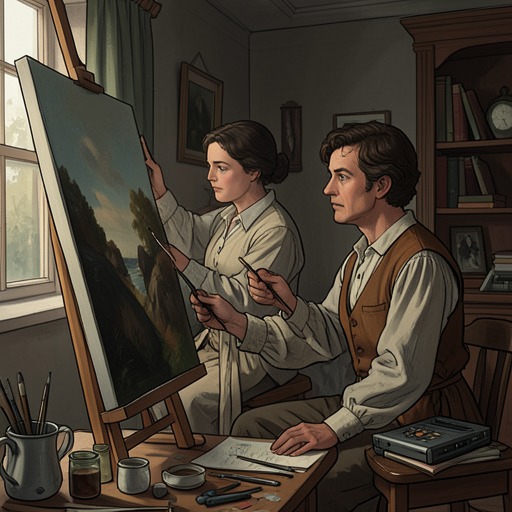
After complaining that his stories lacked true lustre, Patrick receives one of Silvija’s orations on the nature of art. She locates a story’s beginnings in the subconscious rather than the “front section of the brain,” urging him to make himself available and open to whatever might come. The writer can prepare for creation, she argues, but cannot force it: whether the result arrives, and whether it is good, depends on luck.
Work in Apparent Inactivity
Silvija reverses the ordinary distinction between work and idleness. Worry is not proof that writing has failed; it can be evidence that the work is underway. Even when the writer appears to be doing nothing, the process may still be happening beneath conscious thought. The advice thus replaces visible productivity with a less controllable interval of waiting, in which the writer’s task is to remain receptive.
An Unresolved Explanation
The narrator acknowledges the difficulty of reducing Silvija’s account to a more succinct explanation and concedes that no such formulation is likely to be found. That admission echoes the credo itself: artistic creation cannot be entirely managed or explained from the conscious, analytical level. The theory offers Patrick permission to stop demanding immediate results, but it does not promise when inspiration will come or give him power over it.